

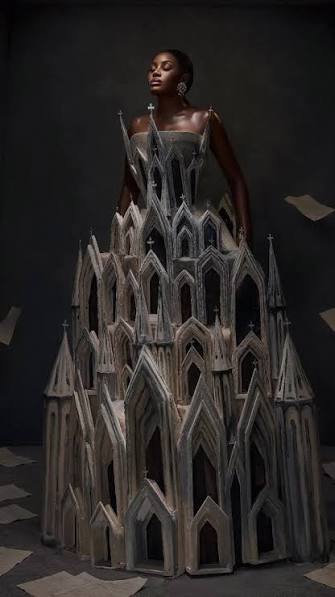
Nana Akua Addo drew widespread attention at the Africa Magic Viewers’ Choice Awards (AMVCA) after appearing in what has since been dubbed the “cathedral dress.” The structured, architectural look quickly became one of the most talked-about moments of the night, dominating social media and fashion coverage.
Shortly after, fashion brand Almée Couture publicly suggested that the concept behind the dress originated with them, implying that their idea had been used without credit. The claim sparked debate online about whether the situation involved creative ownership or opportunism.
Nana Akua Addo later responded, offering a different account of how the dress came to be. According to her, the concept was always hers. She stated that she initially approached Almée Couturewith the idea the previous year but the brand was unable to execute it as intended and refunded her deposit. She then worked with designer Abass Woman, who created the final version seen at the awards.
This response shifted the discussion, raising broader questions about how ideas are owned and credited in fashion.
Who Owns an Idea?
The situation highlights an ongoing issue within creative industries. Ideas often move between collaborators, and it is not always clear where ownership begins or ends.
If the original concept came from Nana Akua Addo and she chose to work with another designer after an initial partnership did not work out, her position is relatively straightforward. In that case, exposure to the idea does not necessarily give the first brand ownership of it.
However, if Almée Couture contributed to developing the concept through design input, sketches or construction ideas, they may feel they played a role that has not been acknowledged.
Legal and Industry Context
Fashion design is difficult to protect legally, particularly at the concept stage. Without formal agreements or documented intellectual property, it can be challenging to establish clear ownership. As a result, many disputes like this are shaped more by public perception than legal outcomes. Timing, communication and visibility often influence how situations are interpreted.
Some critics argued that Almée Couture should have addressed the issue privately rather than after the dress gained attention. Others believe the brand had a right to speak if they felt their contribution had been overlooked.
Execution vs Concept
One point that has remained consistent in the discussion is the role of execution. While ideas are important, the final outcome is often what defines a fashion moment.
In this case, Abass Woman was responsible for producing the finished dress that received public attention. The quality and impact of that execution played a significant role in how the situation has been received.
Ongoing Debate
The court of public opinion remains divided. Some see Almée Couture’s comments as an attempt to associate with a successful design after the fact, while others view it as a legitimate claim for recognition.
The situation reflects a wider issue in fashion, where collaborations are common but not always clearly defined. Without clear agreements at the outset, disagreements over credit can emerge, particularly when a design gains visibility.

What began as a red carpet highlight has developed into a broader conversation about creative ownership, collaboration and acknowledgement within the industry.